
B2B companies are facing more competition than ever for attention, leads, and revenue. The companies that are winning are not just spending more on ads. They are using smarter, automated funnels that guide prospects from first click to booked call with a clear, personalized experience.
Over the past year, we have refined this system even further. The biggest breakthrough has come from integrating two things into the workflow:
New thing 1: Personalized text messaging
New thing 2: LinkedIn-first demand and outreach
When you combine timely text follow-ups with LinkedIn Ads, retargeting, and SDR messaging that shares helpful resources, response rates and sales conversations increase significantly.
In this article, I will walk through how modern B2B companies are using digital funnels to fill their pipeline consistently, and how you can do the same.
Below is an overview of our updated B2B Revenue Funnel Workflow that is producing these results. We have made several refinements, including adding strategic text follow-ups, LinkedIn Ads, and LinkedIn SDR outreach to increase response rates and improve communication with prospects.

This framework allows companies to attract, nurture, and convert customer leads more efficiently than ever before, creating a scalable process that adapts to different offers, industries, and revenue goals.
*Copyright notice: Sharing, reselling, or duplicating this content without Greenstone Media’s written permission is strictly prohibited.
How to Get this System Implemented for Your Company.
If you are looking to consistently generate more qualified opportunities, streamline follow-ups, and fill your pipeline without adding extra work onto your team, we can walk you through exactly how this system works for B2B companies.
This is not a sales call. It is a strategy session where we review your current growth challenges, goals, and the specific offers you want to strengthen to grow your pipeline, and show you how this framework could be applied to your company’s growth plan.
If, at the end of the call, we do not believe we are the perfect partner for your goals, there is no pressure to move forward.
We call this the Automated B2B Revenue Funnel. It is different from most B2B marketing approaches because it systematically and ethically attracts more of your ideal customers and guides them all the way from first click to booked sales conversation.
In the next sections, we will look at how to generate 5, 15, or even 30 qualified sales conversations per month, and what needs to be in place behind the scenes for this to work for your company.
That means you will get:
- A pipeline filled with qualified opportunities and a marketing system your competitors will envy
- Generate new customer leads on demand
- Attract more of your ideal audience
- Automatically convert more leads into sales conversations
- Take the guesswork out of what is holding your pipeline back
Without:
- Making your messaging overly salesy
- Wasting more money on marketing that is not working
- Stressing about where your next opportunity is coming from
- Putting more work on your plate
The common thread we see across consistently growing companies is simple. They did not grow by throwing more money at ads. They installed a simple, automated revenue system that consistently turned interest into qualified conversations and closed deals.
In fact, since 2013 my company has served over 500 clients, many of whom we helped implement similar systems to this one; helping them acquire more customers and increase their bottom line.
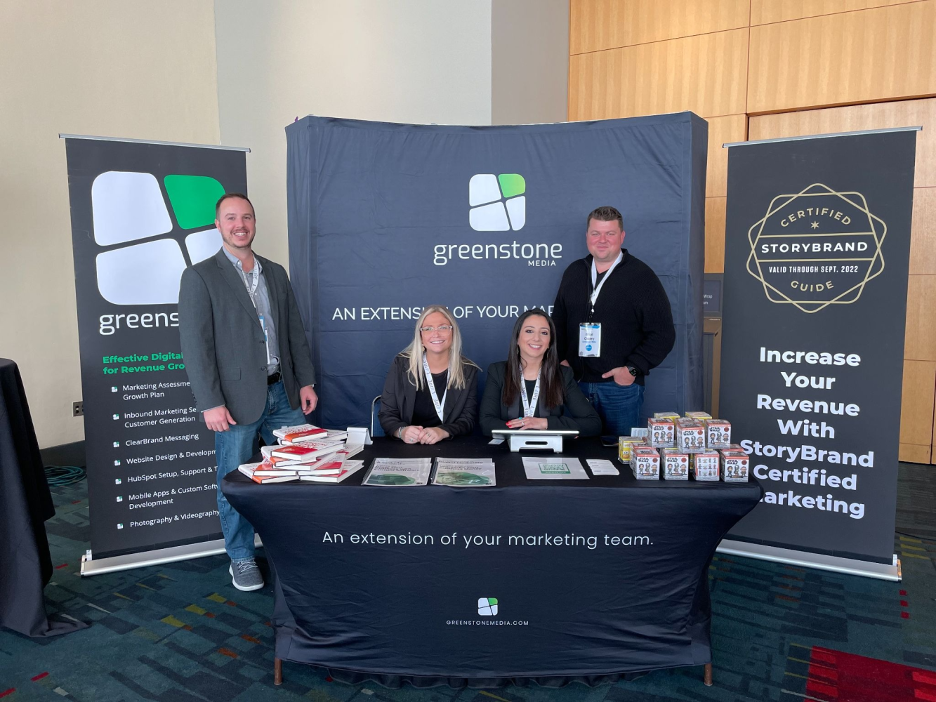
Over the years, we have built and refined our growth systems from what we learned across hundreds of campaigns and a proven messaging framework. On numerous occasions we have also spoken at conferences and lead workshops on this topic, including the Digital Summit Series and other industry events.

Whether you are trying to reach 5 new customers per month or 50, you need an automated, predictable system.
If most of your new customers are generated from referrals and word of mouth, you don’t have a scalable system.
So how do we create this predictable system?
Let’s walk through the five core elements needed for a predictable B2B revenue funnel.
- Pipeline goals, budgets, and metrics for success
- A story customers buy
- A website that serves as a 24/7 salesperson
- An automated sales funnel that nurtures and qualifies leads
- Demand generation across Google, Meta, SEO, plus LinkedIn Ads and LinkedIn SDR outreach
Now, I am going to do a deep dive on each. But first, a quick note on the old ways of lead generation.
You may be familiar with buying lead lists, cold calling with no context, blasting generic email sequences, sending direct mail, or throwing a handful of ads at the wall and hoping something sticks.
Some of those tactics can still produce leads.
But the system in this article is designed to multiply your lead flow and significantly increase sales conversations for targeted offers, while also reducing wasted spend and the pressure on your sales team.

1. PIPELINE GROWTH GOALS, BUDGETS, & METRICS FOR SUCCESS
Alright, circling back to the first pillar of our system, let’s make sure we have clear pipeline growth goals, the specific offers we are growing, the leads needed, and the overall budget.
Otherwise, we will not have realistic expectations.
Running a single LinkedIn campaign or Google campaign promoting all of your services does not cut it anymore. We need targeted campaigns for each core offer. Each offer needs its own lead magnet, funnel, landing page, and messaging for that specific audience.
We also need realistic ad spend budgets to achieve the impressions and clicks needed to generate leads, plus a tracking system to measure performance.
While calculating your ad spend needed is affected by your landscape, especially the difference between Google Ads versus paid social and LinkedIn, here is the framework we use to calculate ballpark lead volume and budget.
The Revenue Math Framework
Start with these numbers:
- Your target number of new customers per month
- Your average close rate from a qualified opportunity to a customer
- Your lead to opportunity conversion rate
- Your estimated cost per lead by channel
For example:
If your goal is 10 new customers per month and your close rate is 20 percent, you need 50 qualified opportunities. If your lead-to-opportunity conversion rate is 20 percent, you need 250 leads per month.
Now you can estimate the budget.
If your blended cost per lead across Meta and LinkedIn is 100 dollars, a 250-lead month requires about 25,000 dollars in ad spend.
These numbers will change based on your offer, market, and channel mix, but the framework stays the same. The point is this: you can predict what you need before you spend money.
How We Track Success
Let’s say all of the above are executed. How do we track success and know if we are on track or off track?
We recommend weekly scorecard tracking. While some KPIs are unique to the type of business, our core KPIs are:
- Clicks from ads and organic
- Conversions, including form fills, booked calls, and content downloads
- Weekly ad spend by channel
- Cost per lead and cost per opportunity
- Booked calls by source
- Show rate and close rate


We highly encourage weekly tracking with goals, rather than monthly tracking alone. Why?
Because it helps you stay ahead and quickly identify when something is breaking, whether it is ad creative fatigue, poor landing page conversion, weak lead quality, or breakdowns in follow-up.
2. A STORY CUSTOMERS BUY INTO
The second core pillar of our system is that you need a story customers buy into.
Almost every B2B company has one main goal with marketing: to generate pipeline and revenue.
Many companies invest heavily in websites, digital marketing, and ads. Unfortunately, all the time and effort do not generate the ROI they expect.
So what is the problem?
It is the marketing message.
Plain and simple, the words you are using are not inviting potential customers into a story they identify with. You are not speaking to them in a way that resonates with them or moves them to action.
The good news is we can fix this.
You can tap into the power of story to create a message that positions your company as the clear guide and makes your offer the obvious next step.
We didn’t invent this framework; we’re simply bringing it to you. Donald Miller, CEO of StoryBrand and author of the book Building a StoryBrand: Clarify Your Message So Customers Will Listen, created this proven seven-part framework that has helped thousands of companies clarify their message.
Since becoming a StoryBrand Certified Agency in 2020 we have used this framework to help many B2B companies craft the right message to attract their ideal audience.
The Structure That Tells the Story
Most storytellers do’t simply begin telling a story and just… see where it goes. They follow a proven structure.
There are seven parts to this storytelling framework. It is the same structure used in popular movies like Star Wars, Harry Potter, The Hunger Games, and Jason Bourne.
The formula goes like this: A character has a problem, meets a guide, receives a plan, and is called to action. That action results in either success or failure.
Here are the seven key parts:
- The character
- The character’s problem or obstacle
- The guide
- The guide’s plan
- The guide calls the character to action
- The character avoids failure with the guide’s help
- The character achieves success

1. The character
In B2B, the main character of the story is your customer. Not your company.
When’s the last time you took a moment, sat down, and asked:
- Who is our ideal buyer?
- What do they want?
- What problem are they facing?
- How does that problem make them feel?
- What plan can we give them to help them avoid failure?
- What would success look like if they followed our plan?
Your customer is already living in a story. Your job is to help them define the problem and position your solution as the path forward.
2. The character’s problem or obstacle
Stories don’t really begin until a problem is introduced.
If your website or ad does not quickly and clearly define the customer’s problem, you will lose them.
Examples of B2B problems (that Greenstone, as the Guide, can help solve):
- Most B2B companies struggle with an inconsistent pipeline and unpredictable revenue.
- Teams spend money on marketing, but lead quality is low, and sales reps don’t trust it.
- Sales cycles drag on because prospects are not educated, and messaging is unclear.
- Relying on referrals and word of mouth, but growth stalls when referrals slow down.
Examples of problems your customers might have (that you can help them solve), depending on your industry:
- Wanting a quality, yet affordable vending solution with healthy options for their breakroom
- Needing accurate, real-time weather data solutions for their mission-critical maritime operations
- Reliable shipping solutions for large freight companies
Once you nail the problem, buyers naturally want to know who can help.
That leads us to the next part…
3. The guide
Meeting the guide is the moment when the hero gets help.
In B2B marketing, your company should position itself as the guide that enters the story and helps the customer solve their problem. But many companies do not know how to be the guide in their marketing messaging. Instead, they’re still trying to be the hero.
Their website is all about them, their awards, their process, and their beliefs.
If every sentence starts with “we”, visitors disengage.
If your copy uses mostly jargon and insider terms instead of words that resonate with your audience, visitors disengage.
Buyers are not looking for another hero. They are looking for a guide who understands them and has helped others succeed.
To figure out if your marketing is positioning your customer and your company correctly, ask yourself:
- Does our site show that we understand our customers’ problems?
- Does our messaging use “you” more than “we”?
- Do we appear both authoritative and empathetic?
Once you establish yourself as the guide, it is time to give your hero a plan.
4. The guide’s plan
Your customer needs three things before they act:
- Empathy
- Authority
- A plan
If you don’t do a good job of showing empathy and authority, you’ll struggle to build trust. If you don’t provide a clear plan, your potential customer (the hero) will not move forward. Give them a simple 3-step plan that removes confusion and shows what happens next.
Example plan:
- Step 1: Download the helpful resource
- Step 2: Book a short strategy call to map it to your company
- Step 3: Install the system and measure pipeline impact
Your plan should feel simple, low risk, and easy to understand.
5. The guide calls the character to action
Without a clear call to action (CTA), prospects are much less likely to engage.
For your primary call to action, avoid vague CTAs like “learn more”. Use direct CTAs that align with your plan:
- Book a strategy call
- Get the resource
- Request the funnel map
- Schedule a walkthrough
Your primary CTA should be related to the main action you want your prospect to take. Clarity drives action.
6. The character avoids failure with the guide’s help
Failure is what happens if the problem goes unsolved.
For our clients, failure often looks like:
- Pipeline remains inconsistent
- Marketing spend continues to feel wasted
- Sales teams stay stressed and reactive
- Revenue targets are missed quarter after quarter
For your customers, failure might be:
- Stagnant employees
- Damaged or missing freight
- Overwhelmed sales reps
Use failure tactfully. Not to manipulate, but to help buyers see the true cost of doing nothing.
7. The character achieves success
Now your job is to show your target audience what success could look like before they even achieve it.
For our clients, success might look like:
- A pipeline that fills consistently
- Sales conversations with educated prospects
- Shorter sales cycles
- Higher close rates
- Marketing and sales teams aligned around the same system
Think about the problem your customer has and what benefits they’ll experience once it’s solved. The more you can paint a picture of success (not just with words, but with pictures too), the easier it will be for them to imagine working with you to achieve it.
The story customers buy is the story they identify with.
3. A WEBSITE THAT CONVERTS
Your website is your company’s digital front door. It’s often one of the first interactions a potential customer has with your business. And you only have about 5 seconds to capture their attention. So you don’t have a second to waste in telling a story that moves buyers to action.
Many B2B companies are losing qualified opportunities because they do not have a website that converts.
Their website is focused on telling their own story rather than inviting the customer into a story and making them the hero (not the business). This typically looks like a website with a poor user experience: missing or unclear CTAs, confusing navigation, no clear plan, and most of the content focused on how great the company is, not on how the customer deserves better and can achieve success with the guide’s help.
There is good news. This is a simple fix.
By following a few best practices, you can create a website that captures the attention of your target audience, builds trust quickly, and inspires them to take the next step.
The Components of a B2B Website that Converts
Your website is much more than an online brochure or a placeholder on the internet. It should be a sales machine that generates leads and books conversations for you 24/7.
How do you make that happen?
By ensuring your website has these four critical components:
- A tagline above the fold (before the user has to scroll)
- A clear call to action that stands out
- Visuals to show what success looks like for your customers
- Descriptions that are clear and concise, not wordy or full of jargon
Let’s break each of these down.
1. Place a tagline above the fold
Because the first 5 seconds on your website are so crucial, the most important place to start is the above-the-fold section.
This is a term derived from newspapers. It refers to what people immediately see on the top half of the front page. In the case of your website, it is what people see before they scroll down.
This is what captures their attention or sends them away.
Imagine someone has just gone to Google and typed in a question or searched for a “near me” related to your industry. They’re experiencing a problem, and they’re looking to Google for answers.
When they land on your website, they need to see two things immediately to stay hooked:
- A tagline
- A concise statement of what you do and who you help
Tell prospects what you can do for them in a simple way. Do not waste the valuable real estate above the fold trying to be clever. Do not be vague. Visitors will leave if they cannot read your opening lines and think, “Yes, that’s for me.”
Remember, someone just came to your site looking for what you offer. So, if you want to successfully position your company as the right solution, simply ask yourself this question: How do you make your customers’ lives better?
The smile you give a satisfied customer—the energy that you feel when you read their testimonial about you—that’s what you should aim to convey above the fold.
For a business looking to get to the next level, it might be a pipeline filled with qualified opportunities. For a company with large products or equipment to move, it might be large-freight shipping solutions that are reliable and never miss a beat. For a corporate vending partner, it might be exciting and healthy snacks that boost employee health and happiness.
For many of our clients, it’s finally having a system that works without constant manual effort or wasted budgets.
That is what you should aim to communicate above the fold, and it also works well for other marketing assets, like in ad copy or a sales pitch.
Here’s an example we use in some of our own messaging:
We help B2B companies consistently fill their pipeline with qualified opportunities using automated funnels, LinkedIn demand generation, and conversion-focused messaging.
In one sentence, the buyer understands:
- Who we help
- What we do
- What results clients can expect
How will you tell your audience what you can do for them?

2. Have a Clear Call to Action
It is surprising how many B2B websites lack a clear call to action. If you do not ask visitors to book a call, request a quote, download a guide, or schedule a strategy session, they will not do it.
You are missing out on qualified opportunities when you don’t have this one simple button in multiple places on your website. In a world of one-click buying, people do not have the attention span to track down your phone number.
They’re not going to spend 5 minutes looking for your email address or a contact form buried in the footer. Remember, most people land on your website because they are experiencing a problem and they’re looking for a solution.
Address their problem. Show them your solution. Then give them a way to buy.
Here are examples of calls to action that work well for B2B companies:
- Schedule a Strategy Call
- Book a Consultation
- Request a Quote
- Schedule a Demo
- Download the Guide
And here are some calls to action you should avoid using (at least as your primary CTA):
- Learn More
- Get Started
- Contact Us
Those buttons feel vague and low commitment, which usually leads to no commitment. Put your call to action button on every page of your website, and more than once.
Think of your call to action button as the point of your entire website. Without it, your website simply will not work.

3. Show What Success Looks Like for Your Customers
It is easy for companies to use their website to talk about themselves. Their mission. Their story. Their values. Their team. Their certifications.
That all sounds great. This content does have its place, but it shouldn’t be the focus.
When you make your website all about you, it is not nearly as effective.
Why?
Because your potential customers want to mentally check off two things when they’re on your website:
- Do they solve the problem I have?
- Do they solve it quickly, affordably, reliably, or better than my current option?
You need to answer those two questions clearly and simply. Then you need to show customers experiencing success.
Show proof through:
- Testimonials
- Case studies
- Before and after results
- Metrics and outcomes
- Screenshots and examples
- Logos and credibility signals
Does your website include your customers talking about the results they got from working with you? Does it visually convey the positive feelings and outcomes that resulted?
Your company does not have to become something else to experience marketing success. You simply have to reflect the story your customers are already living.
At the end of the day, the story of customer experience and customer success is what sells.
When buyers see someone like them winning, they trust you more quickly.

4. Be Concise When Describing What You Do
Here is the problem many B2B companies run into when they talk about their services: They use insider language that only their team members or industry experts understand.
We call this the curse of knowledge.
It’s like when you go to the mechanic, and he starts telling you what’s wrong with your car, but you don’t have a clue what he’s talking about. All you need to know is that before the car was making this awful noise, and that someone here can fix it.
Similarly, this is what a visitor needs when browsing your website. Speak their language. Use the words your customers use.
Most companies struggle to speak in a way that is easily digestible because they want to sound like experts.
The problem is, this either confuses or bores your potential customer. Humans are wired to naturally choose the path of least resistance—what takes less brainpower and effort—so, if your content makes a lot of sense to you (an expert in your business) but wouldn’t make much sense to your customer (an expert in their business), it will take more brainpower for them to figure out if you can solve their problem.
People do not buy what they cannot understand. Not because they aren’t intelligent, but because they’re busy and already stressed. If you make them work too hard to understand your solution, they’ll move on to one they do understand.
A helpful filter is this:
- If you cannot explain what you do in a sentence a sixth grader could understand, your messaging is too complicated.
Simplify your content so anyone can instantly understand:
- What you do
- Who you help
- What problem you solve
- What you want them to do next

The Takeaway
By implementing all four of these techniques, your company will be much closer to having a B2B website that converts. Instead of losing visitors, your website will successfully engage the right audience and move them to take action.
If you need help implementing these components on your website, book a call with our team and we will walk you through what to fix first.
4. AN AUTOMATED B2B SALES FUNNEL
Many B2B companies waste tons of money on marketing and advertising because they are managing most of their marketing efforts manually. And too often those efforts do not produce the results expected. Wasted time and wasted money are a frustrating combination.
But there is a simple solution.
An automated and effective sales funnel.
Now that is a winning combination that, once built correctly, brings in new leads while you focus on discovery calls and closing the right deals (or even while you sleep).
Critical Components of an Automated Sales Funnel
Sales funnels, when executed correctly, are one of the most impactful ways to increase the number of leads your website generates and then convert those leads into paying customers.
If you want to use digital marketing to grow your pipeline, start with these three core components:
- Create compelling content
- Capture contact information
- Automate and segment email campaigns
Let’s break each one down.
1. Create Compelling Content
The first step toward making your sales funnel effective is clearly communicating what your company does. If visitors land on your website and cannot quickly understand what you do and how you help, they disengage and disappear.
Before you do anything else, create a clear brand message, then use it to write (or update) marketing copy that is clear and concise. A compelling brand message is one of the best and least expensive ways to increase engagement and conversion rates. If you confuse visitors, you lose their attention. If you tell a story that engages prospects, your sales funnel produces results.
Here is the checklist we use to make sure the content is actually compelling and not just noise:
Checklist:
- Define what your customers want in relation to your product or service.
- Identify the main problems your company helps customers solve.
- Position your company as a trusted guide with empathy and authority.
- Give your customers a plan to follow that will solve their problems.
- Offer a clear call to action for them to get started along this path.
Once you clarify your message so you are inviting customers into a compelling story, you want your website to support that story and move visitors through a smooth buyer journey.
The top of your homepage should clearly communicate what you offer and how it benefits the customer before they even have to scroll down (we call this the “above-the-fold” section). If prospects cannot immediately understand why they need your services and how to take the next step, you are creating confusion and missing sales opportunities.
Then you need to reinforce conversion opportunities throughout the site. Things like downloadable content, blog subscriptions, chatbots, and pop-ups. When you combine compelling content with conversion opportunities, your website becomes a lead-generating machine.
It isn’t about making your site spammy or creating an annoying user experience—here’s looking at you, recipe blogs. This can be done tastefully, guiding the user through the site to find what they need and encouraging them to work with you.
Checklist:
- Clearly state what you offer customers in the header of your website.
- Place an obvious call to action in the top right corner of the site.
- Offer a piece of content in exchange for your visitor’s email address.
- Use images that illustrate what success looks like for your customer.
- Make the text on your site scannable and easy to digest.
Client example:

2. Capture Contact Information
Here is what most companies forget: Not everyone who comes to your website is ready to buy.
In fact, the majority of visitors are browsing. They are researching. They are comparing. They are window shopping.
If you do not have a way to capture their contact information, they leave, and you never hear from them again.
This is the power of content marketing.
The key to an effective sales funnel is a lead-generating asset, which is a piece of content given in exchange for your visitor’s contact information. After all, if you do not have your prospect’s email address, you cannot email them.
A lead generator allows you to engage with prospects without requiring them to fully commit to a purchase. If you do not have a secondary call to action, such as a downloadable guide or demo video, you miss the chance to engage the people who are interested but not yet ready.
The lead-generating asset should do three things:
- Provide value immediately
- Help your customer solve a problem
- Position your company as the authority in your space
If the content does not immediately provide value, it will not effectively gather contact information and generate leads.
Checklist:
- Create a lead-generating asset to offer on your website.
- Give your piece of content an intriguing title to increase opt-ins.
- Ensure this downloadable content offers immediate value to your customers.
- Establish your brand as the authority in your industry or area of expertise.
- Capture your prospects’ email addresses so you can engage with them.
Client example:

3. Automate and Segment Email Campaigns
Now that you have successfully captured contact information with a lead-generating asset, it is time to nurture the relationship via email.
Email campaigns are one of the highest-leverage tools for turning a lead into a customer. According to HubSpot, the future of email is still very bright:
- Email generates $38 for every $1 spent, which is an astounding 3,800% ROI.
- 73% of millennials prefer communications from organizations to come via email.
- 99% of consumers check their email every day.
- 59% of respondents say marketing emails influence their purchase decisions.
- 78% of marketers have seen an increase in email engagement over the last 12 months.
If you are not using email to actively nurture your contact database, it is very unlikely that leads will move toward a purchase decision on their own. Automated email campaigns are a low-risk way to build a relationship and gradually establish trust until the prospect is ready to buy.
For optimum effectiveness, we use a framework, which we’ll dive into below.
Email #1: The first email in your automated campaign should send the lead-generating asset that the contact requested. Whether that’s a downloadable file, an access link, or an event confirmation, start the relationship off right by providing what they asked for as soon as possible.
Email #2 – #4: In the next few emails, continue drawing on your brand message to remind your contact of the problem they are facing and how you can help them solve it. Additional resources such as blog articles, case studies, testimonials, etc are great to include in these as well.
Email #5: In the final email, be sure to ask for the sale to increase your chances of converting the lead into a customer.
Most campaigns should have a total of five to six emails spaced out by a few days.
When executed correctly, automated email campaigns can make a massive difference in your bottom line. Previously, your website was only generating revenue from visitors who were immediately ready to buy, likely less than 10 percent. Now, your website can generate revenue from the other 90 percent of visitors who are browsing.
Checklist:
- Draft a sequence of five emails that deliver valuable information to your prospects.
- Acknowledge the customer’s pain point and position your product as the solution.
- Use the sequence to educate your contact on your product or service and why they should choose you over the competition.
- Continue sending nurturing emails to establish a sense of familiarity and trust.
- Close the sequence with a sales pitch to turn prospects into paying customers.
Client example:

The Takeaway
If your goal is to build a more productive and profitable business, your first step should be clarifying your brand message. Once you can clearly communicate what you offer customers, you can implement that message into your sales systems and on your website in a compelling way. Then, by using conversion tactics, you gather contact information and nurture leads into paying customers.
If you want help implementing an automated sales funnel customized to your offers, traffic sources, and sales process, schedule a call with our team, and we will walk you through what to install first.
5. GENERATING LEADS ON DEMAND WITH PAID ADS, SEO, AND LINKEDIN
Now that you have clear messaging, a website that converts, and an automated sales funnel, you are positioned to maximize ROI with paid traffic and inbound marketing. Without these pieces in place, running ads is like pouring money into a leaky bucket.
You might get clicks. You might even get leads. But the lead quality is inconsistent, follow-up is messy, and your team ends up blaming the channel instead of the system.
In this section, we will cover the key areas needed to generate awareness, drive demand, and sustain predictable lead flow across paid and organic channels, while keeping everything aligned with the same funnel structure.
Understanding the B2B Buyer Journey
There are three main stages a B2B customer moves through before they buy. Your job is to match the right message and the right offer to each stage.
- Awareness – when prospects know they have a problem, but they do not trust anyone yet.
- Consideration – when prospects are comparing solutions and looking for proof.
- Decision (and conversion) – when they are ready to talk to someone and choose a provider.
If you treat every stage the same, your marketing feels pushy, and your conversion rates suffer. So, let’s talk about marketing channels and how they fit into the buyer journey.
Generating Awareness and Demand with Meta Ads
Meta Ads (Facebook and Instagram) help you reach potential customers who may need your solution but are not actively searching for it right now.
This is the difference between generating demand and harvesting demand. While Google Ads captures existing intent, Meta Ads creates intent by getting the right message in front of the right person before they start searching. Meta is also powerful for retargeting, meaning you can stay in front of visitors who checked out your site but did not convert.
Your messaging and lead-generating assets are the key to converting on Meta. You’re not relying on someone who is already searching for you. You are interrupting their scroll and earning attention with a compelling story.
A checklist for generating leads from Meta:
- Develop ad creative that is specific, clear, and enticing. Focus on the transformation, not just the service.
- Create and promote lead-generating assets that provide free value and solve a real problem.
- Build landing pages for your ads that are focused on conversion and optimized for mobile.
- Do not drive ads directly to your homepage or generic service pages. You will miss a huge portion of leads.
- Ensure your email sequences are integrated with your forms so leads instantly enter your funnel.
- Run top-of-funnel campaigns (Awareness) that promote lead magnets and long-form resources.
- Run middle of the funnel retargeting/lookalike audience (Consideration) campaigns – for users who have expressed interest in your services.
- Run bottom of the funnel retargeting/lookalike audience (Decision) campaign for prospects that have requested more information and lead magnet downloads but have not converted.
- Keep weekly nurture emails going to all leads who have not booked a call yet. Segment by offer.
*Bonus hacks for Meta:
- If you sell multiple services, create separate funnels and campaigns per offer.
- Use customer testimonials and short case study snippets as retargeting creative.
- Use video ads that teach something simple and then offer the guide as the next step.
Generating Leads in the Consideration Stage with Google Ads
Some of your buyers are actively searching on Google for your solutions. This is where Google Ads becomes your demand capture engine. Search ads are paid text ads displayed on Google’s search results pages.
The benefit of this type of paid ad is that you’re displaying your ad in the place where most searchers are looking for an answer on Google. These ads are displayed in the same formatting as other results (except for denoting them as an “Ad”), which users are accustomed to seeing and clicking on. Another benefit is that we can customize the message to invite your audience into a story with a more compelling message compared to the other results that have an organic Meta description snippet.
To win with Google Ads, the system has to be clean. Most companies make two mistakes here:
- They send search traffic to a generic page.
- They do not offer a lead magnet or secondary call to action for window shoppers.
Here is our checklist to optimize Google Ads performance:
- Do keyword research first using tools like SEMRush or UberSuggest and the Google Keyword Planner to validate demand and budget.
- Create ad groups around specific offers, not broad services.
- Drive all ads to landing pages built for that offer.
- Do not drive ads to the homepage or generic service pages.
- Add lead magnets to landing pages as a secondary call to action. This alone can double conversions in many accounts.
- Turn on remarketing display ads so visitors who clicked your search ad but did not convert continue seeing you.
- Track form fills, booked calls, and qualified leads, not just clicks.
Google Ads will often bring higher intent leads. But your funnel and follow-up determine whether that intent turns into pipeline.
Inbound Marketing and SEO for Long-term Lead Flow
While paid ads generate leads on demand quickly, SEO and inbound marketing are long-term investments that compound over time. If you stay committed to SEO, it becomes one of the most profitable channels because it keeps producing leads without paying for every click.
Here is the simple inbound content strategy we use:
- Publish content that answers buyer questions
- Rank for topics your buyer is searching
- Embed lead magnets into that content
- Nurture those leads with email and follow-up workflows
For B2B, we typically recommend building content around:
- Offer-specific topics
- Problem-specific topics
- Comparison topics
- Case study and results topics
- Framework and process topics
A simple rule of thumb is to create 3 to 5 articles per offer that address the problems your buyer is trying to solve and the outcomes they want. Then repurpose those articles in your email nurture sequence, LinkedIn content, and your SDR follow-ups.
Checklist for SEO and inbound marketing:
- Run a site audit using an SEO tool to identify technical issues and fix them.
- Create topic clusters per offer, not random blog posts.
- Write long-form articles that teach, not thin content that sells.
- Add lead magnets inside articles to capture contact information.
- Create pillar pages for major topics and link supporting articles back to them.
- Build backlinks through partnerships, guest posts, and collaborations to increase domain authority.
- Track rankings, traffic, conversions, and assisted conversions over time.
SEO is slower at first, but powerful long-term. Paid ads generate leads now. A strong funnel lets both channels work together.
LinkedIn Ads for B2B Precision Targeting
When it comes to B2b, LinkedIn is one of the strongest channels when used correctly. The biggest mistake companies make on LinkedIn is pushing too hard for a demo too early. LinkedIn works best when you lead with value, build trust, and then invite a conversation.
We use LinkedIn Ads primarily to:
- Reach decision makers with precision targeting
- Promote helpful resources and long-form content
- Retarget engaged users
- Create warm audiences for SDR outreach
Checklist for LinkedIn Ads:
- Choose one offer and build one clean funnel first.
- Promote a helpful resource, not a sales pitch.
- Use a landing page built for that resource.
- Retarget people who clicked, watched the video, or engaged with the content.
- Use LinkedIn Lead Gen forms only when follow-up is extremely fast.
- Track pipeline outcomes, not just leads.
When LinkedIn Ads are paired with the next section, the results improve dramatically.
6. ONE SYSTEM WITH LINKEDIN ADS AND LINKEDIN OUTREACH
The combination of LinkedIn Ads and LinkedIn outreach campaigns is a major differentiator for us. Most companies run ads and treat SDR outreach as a completely separate effort. We combine them into one system.
Why this matters:
- Ads create awareness and engagement.
- SDRs convert that engagement into conversations.
- Retargeting keeps your brand top of mind while the buyer deliberates.
When LinkedIn Ads and outreach efforts are connected, SDR outreach no longer feels cold. It feels relevant.
The Value-first LinkedIn Loop
Here is the loop we build:
- Step 1: LinkedIn Ads put a helpful resource in front of the right audience.
- Step 2: Retargeting follows engaged users with more value.
- Step 3: SDRs reach out, referencing the resource and offering help.
- Step 4: Prospects respond because they recognize you, and trust is higher.
- Step 5: Calls get booked with warmer, better-fit buyers.
This changes the tone of outreach completely.
Instead of cold pitching, SDRs are simply continuing a conversation the prospect already started with your content.
What Makes this Approach Work?
Three things make this approach effective:
- The resource has to be genuinely helpful.
- The outreach has to be human and short.
- The next step has to be low-pressure.
When done correctly, prospects feel guided, not sold.
Checklist for combining LinkedIn Ads and outreach:
- Run LinkedIn Ads to a long-form article or lead magnet that solves a real problem.
- Build retargeting audiences of clickers, engagers, and video viewers.
- Create a second wave of ads to retarget with proof, case studies, or short framework videos.
- Have SDRs prioritize outreach to the people most engaged.
- Ensure the SDR message references the specific resource and offers help.
- Use a simple question to start a conversation, not a pitch.
- Track response rates, meeting rates, and opportunity creation from this system.
This is the bridge between marketing and sales that most companies are missing.
7. THE SDR MESSAGE SEQUENCE AND WORKFLOW
Here is the core workflow we use. The key is that the SDR is not pitching. They are guiding.
The workflow:
- Step 1: Prospect engages with a long-form article or lead magnet.
- Step 2: Prospect receives the resource via email immediately.
- Step 3: Prospect receives a short text follow-up offering help and a simple question.
- Step 4: SDR connects on LinkedIn, referencing the resource.
- Step 5: SDR sends a short message asking a simple question.
- Step 6: If engaged, SDR offers a quick call discovery call to help them get started.
This works because it’s reflective of how people actually buy. First, they engage with content, then trust is built, and then they talk to sales.
Cold pitching skips the trust stage. This workflow respects the buyer journey and earns the conversation.
Here’s an example SDR message sequence:
Connection request
Hey [Name], saw you checked out our resource on building a predictable B2B pipeline. Thought it might be useful given your role at [Company]. Open to connecting?
Message 1 after connection
Thanks for connecting, [Name]. Quick question. Are you currently focused more on increasing lead volume or improving lead quality and booked calls?
Message 2 if they respond:
That makes sense. If it helps, we have a simple funnel map that shows how we connect LinkedIn Ads, email nurture, and SDR outreach into one system. Want me to send it?
Message 3 if they say yes:
Here it is. If you want, I can also share the short checklist we use to identify where the funnel is leaking. No pitch, just a quick diagnostic. Would that be helpful?
Message 4 converting to a call
If you want to apply it to your company, happy to do a quick 15-minute call and map what this would look like for you. Want me to send a link?
Checklist for SDR execution:
- Use content engagement as the trigger for outreach whenever possible.
- Keep messages short and human.
- Ask questions that start conversations.
- Offer a helpful resource before offering a call.
- Do not send long paragraphs.
- Do not pitch features.
- Do not ask for a demo immediately.
- Track response rate, conversation rate, and booked calls.
If you do this consistently, SDR outreach becomes a part of your marketing and sales strategy, not a separate cold effort.
8. PITCH DECKS THAT SELL
Even the best funnels break if the sales presentation is weak. One tool that helps is a conversion-optimized pitch deck.
If the pitch is weak, here’s what could happen:
- Your marketing tells a clear story and engages a lead.
- The lead gets excited and books a call.
- Your automation system preps them for the call and reminds them to show up.
- The sales rep uses a deck that is generic, confusing, or feature-heavy.
- Momentum drops… and the deal stalls.
This is why we suggest creating a presentation that aligns with the same storytelling framework used in your ads, website, and funnel. When your pitch deck aligns with the brand message your prospects already bought into, objections decrease, and close rates increase.
What a B2B Pitch Deck Should Do
A pitch deck is not a brochure. It is a guided narrative that helps the buyer feel confident.
A strong deck should:
- Reinforce the customer problem
- Show the cost of inaction
- Introduce your company as the guide
- Present a simple plan
- Show proof and outcomes
- Make the decision easy
The StoryBrand-aligned Pitch Deck Flow
Here is a simple structure that works well:
The Intro Slide
Slide 1: The customer and what they want
Slide 2: The problem preventing them from getting it
Slide 3: What it is costing them today
Slide 4: Why typical solutions fail
Slide 5: Your process and plan
Slide 6: Proof, results, and case studies
Slide 7: What success looks like
Slide 8: Clear next step
Depending on your layout and content, you may want to combine some of the slides, but be careful not to cram each slide with too much information. Clear and concise is best.
When you apply the effective storytelling framework to your sales deck, your sales team no longer feels the pressure to convince. The story does the heavy lifting.
Checklist for pitch decks that close:
- Use the same language as the website and funnel.
- Lead with the customer problem, not your company bio.
- Make the plan simple and visual.
- Include proof early, not only at the end.
- Show outcomes with metrics and stories.
- End with one clear call to action for next steps.
- Avoid dense text. Keep it scannable.
- Ensure the deck supports the conversation, not replaces it.
Pitch decks are often the missing link between marketing and closed revenue.
Client Example (B2B SaaS):

9. WHAT HAPPENS WHEN THIS SYSTEM IS INSTALLED
At this point, you may be wondering whether this system works in practice, not just in theory.
Below are real examples of what happens when messaging, website conversion, automated funnels, paid traffic, LinkedIn outreach, and sales alignment are installed correctly.
Example 1: Canteen Vending
Canteen generated:
- 187,000 new yearly website visitors
- 135 percent lift in SEO traffic
- 5 million dollars in new revenue generated from digital campaigns
These results were achieved through a full-funnel content and SEO strategy, combined with an integrated sales funnel rebuild. Messaging was clarified, landing pages were rebuilt for conversion, and organic plus paid traffic were directed into a structured nurture and sales workflow.
View the full success story here.
Example 2: Burnstein Von Seelen Precision Castings
Burnstein Von Seelen achieved:
- Page one rankings for every major industrial service term
- Consistent inbound RFQs generated through SEO and Google Ads
- Messaging refinement and a funnel optimization strategy aligned with industrial buyers
Instead of relying solely on outbound sales, they built a system that attracted high-intent prospects searching for precision castings and converted them using optimized landing pages and structured follow-up.
View the full success story here.
Example 3: Carolina Conveying
Carolina Conveying achieved:
- Page one rankings across all core product keywords, including rotary valves, screw conveyors, and knife gate valves
- Boosted organic traffic by 12 percent or more month over month
- Established a Google Ads system, driving 20 or more monthly conversions
- Rebuilt messaging and funnel structure to align with how industrial buyers evaluate solutions
Rather than running disconnected campaigns, they aligned SEO, paid traffic, and funnel strategy around one consistent message and conversion process.
View the full success story here.
What Do These Have in Common?
The common thread across these companies is not bigger campaign budgets.
It is system alignment. They operate in different industries. They sell different products. They serve different markets. They each used an effective funnel system.
Your pipeline becomes predictable when your messaging is clear, your website converts, your funnel nurtures, traffic is intentional, LinkedIn is integrated with outreach, and sales presentations reinforce the same story.
And predictable pipeline changes everything.
Want This System for Your Company?
If this resonates with you, and you want to consistently grow your pipeline at a pace that makes a measurable impact inside your company, let’s talk.
This is a one-on-one strategy session where we discuss your specific revenue goals, your current funnel, and where opportunities may be leaking in your system.
Together, we’ll walk through your:
- Target revenue and pipeline numbers
- Current messaging and positioning
- Website conversion performance
- Lead generation channels
- LinkedIn and SDR outreach process
- Sales presentation and close rates
Then we will show you exactly how this automated B2B lead-gen system could be set up for your company.
This is not a sales pitch. You are not saying yes (unless you really want to).
You are saying maybe.
At the end of the call, if we do not believe we are the perfect partner to help you reach your pipeline and revenue goals, there is absolutely no pressure or obligation to move forward.
We are here to listen, understand your growth challenges, and provide a clear path forward.
Click here to find a time that works best for your calendar and book your strategy session.
This could be the decision that transforms your marketing from unpredictable lead flow into a consistent, scalable revenue engine for 2026 and beyond.
